

Supporting autistic people begins with understanding that no two autistic individuals are the same.
April marks ‘World Autism Acceptance Month’, a time to reflect on how we understand and support autistic people in our communities.
As someone who is late-diagnosed AuDHD and parent to neurodivergent children, I’ve been reflecting on one idea that comes up again and again:
If you’ve met one autistic person… you’ve met one autistic person.
Understanding difference, not deficit
Autistic people have highly individual profiles of strengths and support needs. You may hear this described as a ‘spiky profile’, where someone can have significant strengths in some areas and equally significant challenges in others.
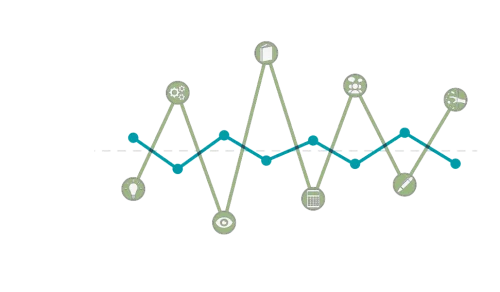
For example, someone might have an excellent vocabulary but struggle with processing information quickly. Another person may have strong expertise in a particular area but find everyday tasks overwhelming.
Because of this, commonly used labels such as ‘high-functioning’ or ‘low-functioning’ don’t tell us what we really need to know. They flatten complexity and can lead to assumptions that don’t reflect a person’s lived experience.
The autistic spectrum isn’t linear; it’s not about being ‘more’ or ‘less’ autistic. It’s about different patterns of strengths, differences, and support needs.
The problem with assumptions
When we rely on labels or surface-level observations, it’s easy to make assumptions. Sometimes people appear articulate, capable, and independent on the surface, but that doesn’t mean that things are easy behind the scenes.
Equally, people with more visible support needs may have strengths that are easily overlooked.
In my own experience of being late-diagnosed, people have generally been accepting, but very few have asked:
- What’s it like for you?
- What do you find difficult?
- What helps?
Not because they don’t care, but because people often feel unsure, and worry about saying the wrong thing, or assume they already understand.
A different approach: curiosity and collaboration
If assumptions don’t work, what does? Research and lived experience point to a consistent answer: we need to be curious, open, and willing to listen.
For those working in frontline roles (and anyone supporting or working with autistic people), this means:
- Taking a person-centred approach
- Focusing on individual strengths and support needs
- Creating opportunities for open and honest conversations
- Involving people in shaping their own support (co-production)
Creating psychological safety
For people to share their experiences and support needs, they need to feel psychologically safe. This applies both to people accessing frontline services and to employees in the workplace.
When people feel safe to say:
- I’m finding this part difficult and could use some support
- I need more clarification
- Can we do this task a different way?
- I work best when…
We move away from guesswork and towards meaningful, effective support.
How do we create psychological safety?
As with support needs, psychological safety doesn’t look the same for everyone, so a one-size-fits-all approach doesn’t work. Creating psychological safety means building environments that value and support different communication and interaction styles.
In practice, psychologically safe spaces are those where people:
- Listen to understand, not to respond
- Communicate openly and transparently
- Stay curious and non-judgemental
- Recognise and build on each person’s strengths
- Offer flexibility and reasonable adjustments
- Show care and compassion, particularly towards voices that aren’t always heard.
Moving towards more individualised support
When people feel psychologically safe to share what they find difficult and what helps, we can move beyond assumptions and generic approaches. Supporting autistic people well means using that insight collaboratively and flexibly, adapting support in ways that reflect the individual rather than the label.
These principles sit at the heart of strengths-based and person-centred approaches.
Learn More
These ideas are explored in more depth in BHT Training’s Supporting Autistic People course, which focuses on practical, neurodivergence-affirming approaches to supporting clients and tenants.
You can find out more here:
Supporting Autistic People – BHT Training
We also offer training in Strengths-Based Support Planning, which complements this approach by helping staff develop more person-centred and collaborative ways of working.
Strengths-Based Support Planning – BHT Training
Key takeaway
This Autism Acceptance Month, it’s worth reflecting on a simple but powerful shift:
Instead of asking, ‘What does this label mean?’, we can ask ‘How can I work with this person to understand their support needs’.
That shift, from assumption to curiosity, can make all the difference.
Here are some useful links that helped with writing this blog:
Psychological safety and neurodiversity – Psych Safety
Psychological safety for neurodiversity: One size does not fit all – Training Journal
Autism, it’s Labels and the Language of Pathologising Rhetoric – The Autistic Advocate
Spiky Profiles – Autism Understood
Written by Pascale Hart, Learning & Development Manager at BHT Sussex.
Pascale has recently completed Leading Neurodiversity in the Workplace – CMI Level 7